Brand, visualisation & web
Launching a boat before it touches the water
Conde Racing Lab was about to reveal Project33, a foiling catamaran, with no boat yet to photograph. We built everything the world would see of it: the brand, the website, and a complete boat written as parametric code with AI, rendered until it looked real.
The challenge
A launch usually starts from photographs. Here there were none: the boat was still being built and the reveal date was set. Everything the audience would see had to be made from nothing, and convince people who know exactly what a foiling catamaran looks like at speed. One wrong foil, and the image is dismissed. We were working against the clock, in a fixed order: the identity, then the images, then a site to hold them.
Site & Branding
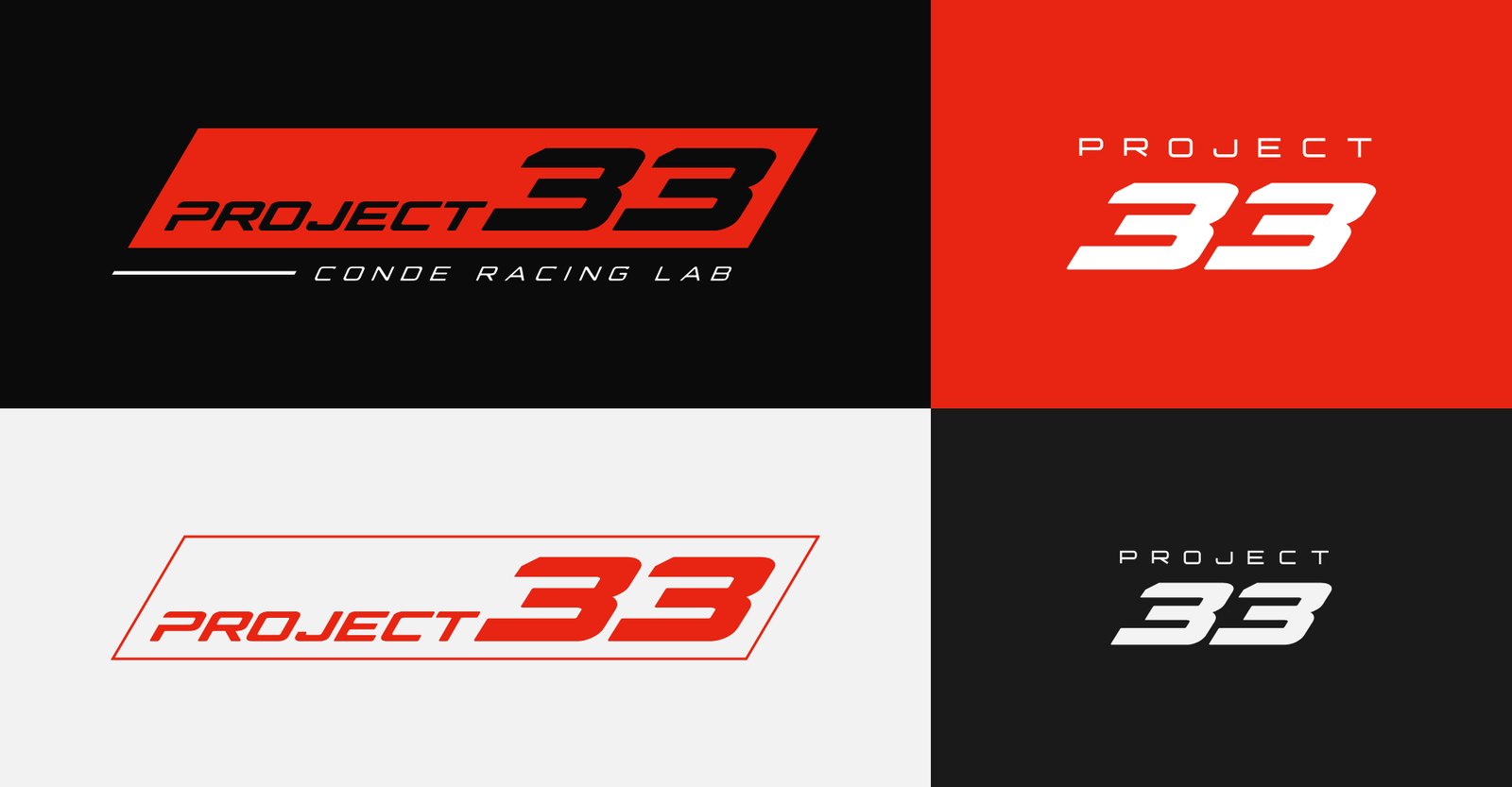
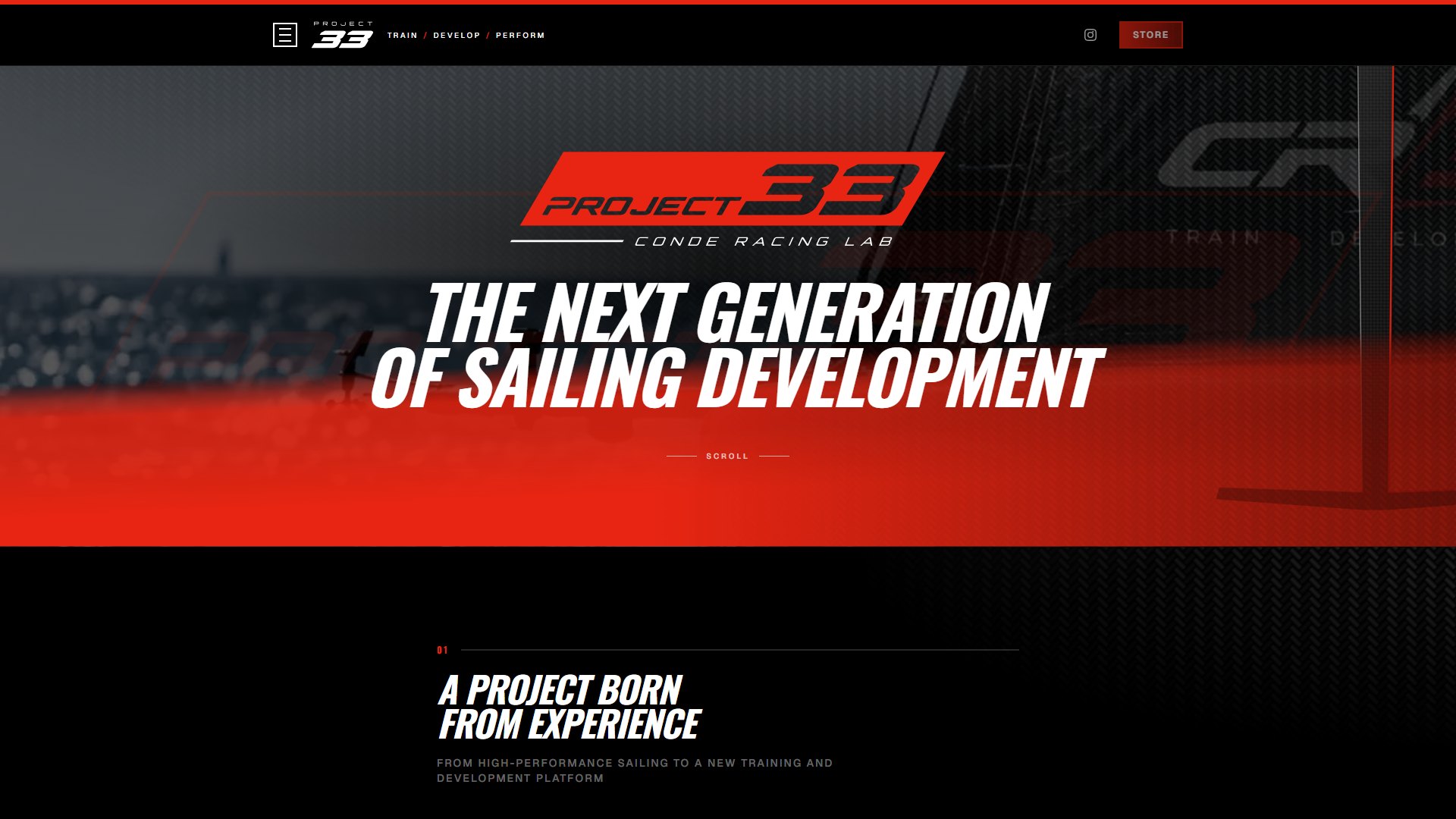
We designed the Project33 logo and the identity around it: a main mark and a compact one, in positive, negative and transparent, from a sail to a favicon. The direction was sailing engineering with the visual discipline of premium motorsport: one red with black and white, carbon as a material, and a slanted, condensed display face. A living design and media guide keeps the brand consistent after we leave, down to the hull livery and the sails.
The site was one build with two faces. Before the reveal, a single page with the logo, a countdown and a newsletter sign-up, built to European privacy rules. Behind it, the full launch site (hero film, identity sting, studio reveal, key facts and partners) waited finished, and went live at the reveal with one switch. It is the official site today, at conderacinglab.com.
From CAD to render
Photorealism lives or dies on geometry, and only part of the boat existed as CAD. We built the rest as code, written with AI, and rendered from that code, in four steps, each checked before the next.
1. CAD → image
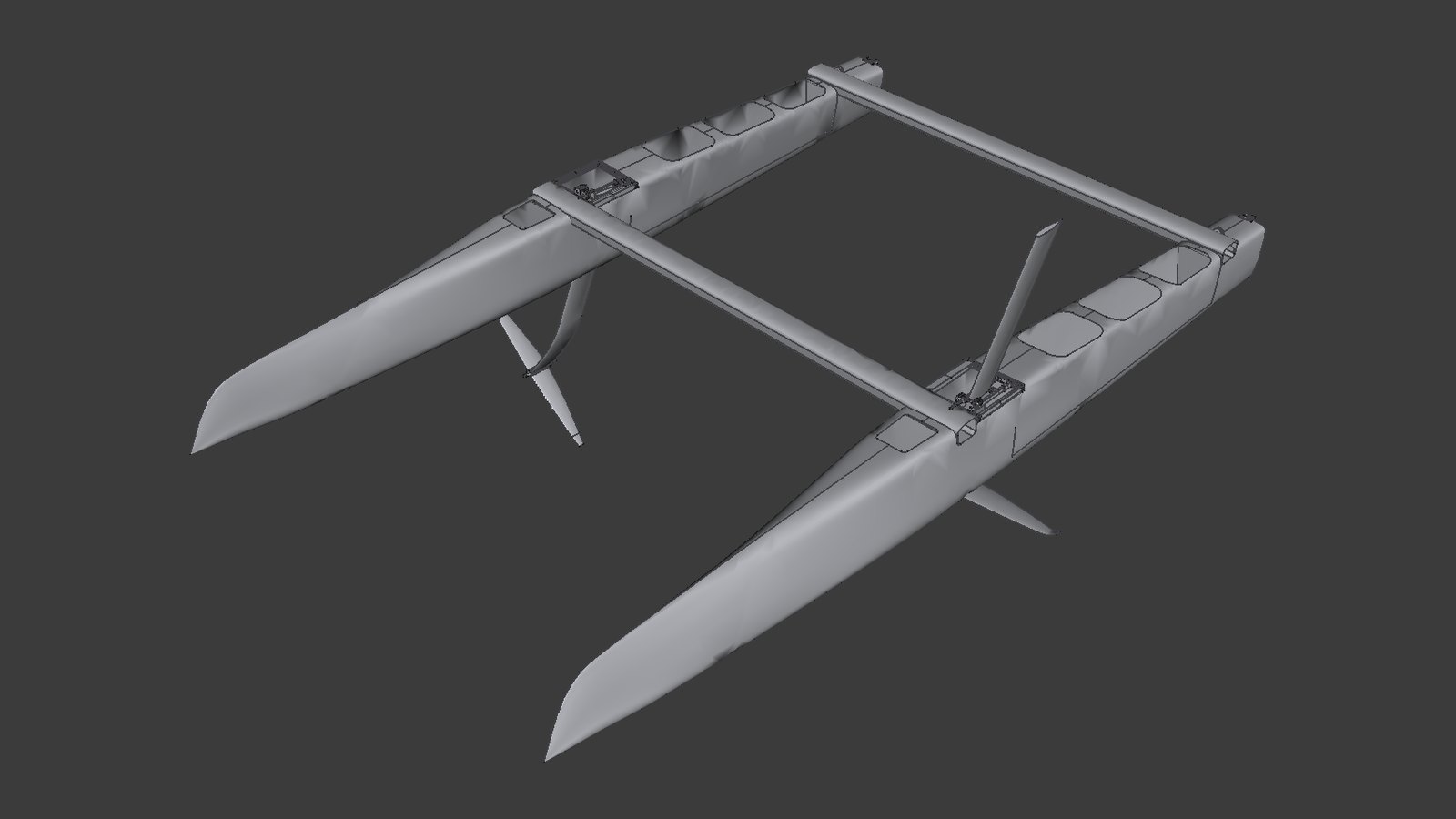
We started from a few elements of the design team’s geometry: the hulls, the beams and the foils. The rig, sails, rudders and deck did not exist yet. We turned what there was into images and set them beside references of the finished boat.
2. Image → code
An AI model read those images and wrote the boat as a parametric script. Hull and fitting dimensions came from the design team’s geometry; the rest were read from the images, each one a named constant, so a wrong estimate is one line to fix, not a part to redraw.
3. Code → 3D
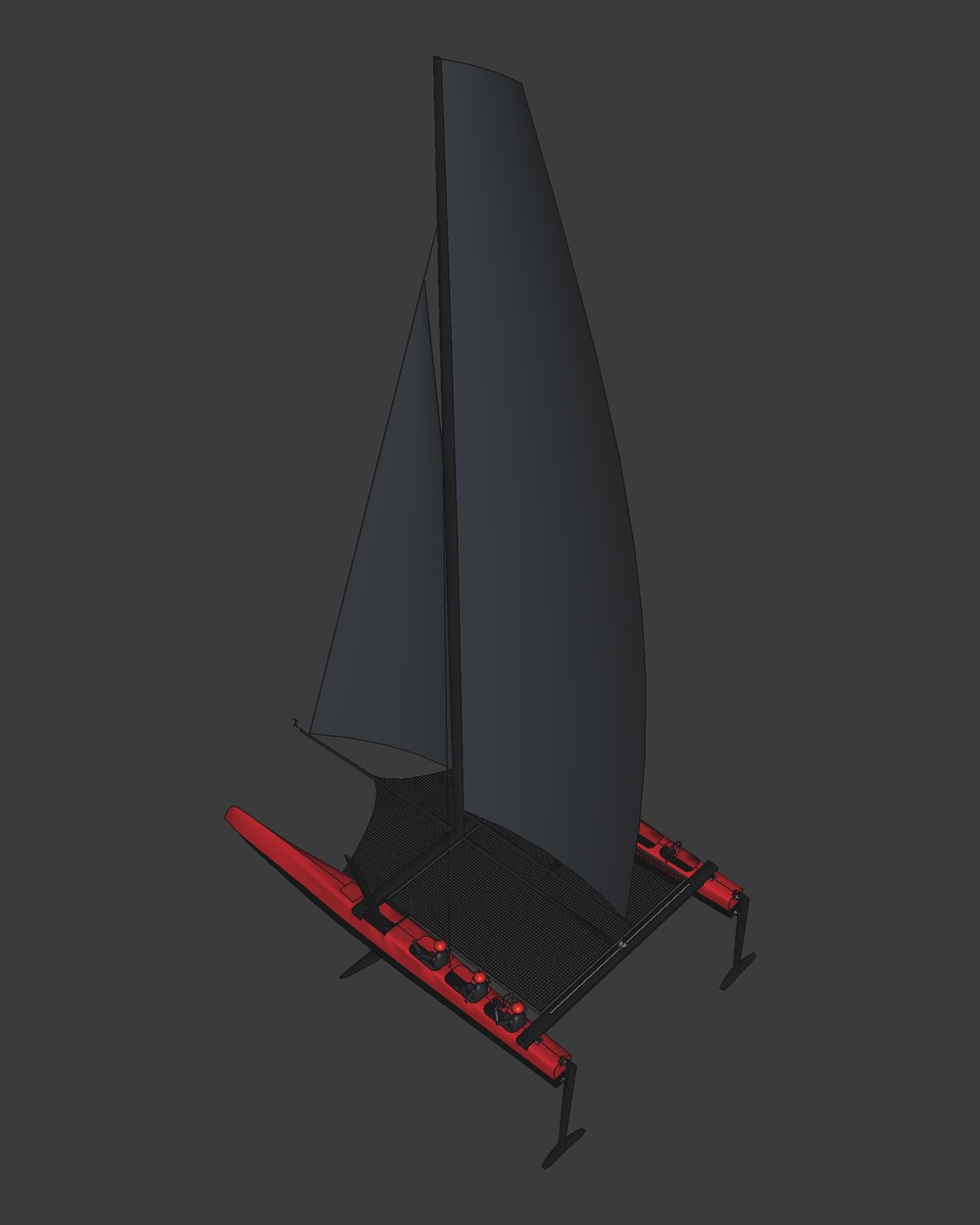
Each part is a short function: foil sections from a standard profile, a mast that tapers in its top third, sails with a set camber. Where the brief gives a target rather than a shape, the code solves for it: the mainsail’s roach is adjusted until the area is right. One run rebuilds the whole boat on the design team’s hulls and foils. It is not manufacturing CAD: it is a model made to look right from every camera angle, where a design change is a number and a rerun.
def mainsail():
    tack_z = BOOM_Z + BOOM_D / 2
    height = MAIN_HEAD_Z - tack_z
    foot = BOOM_LEN - 100

    def z(h):
        return tack_z + h * height

    def luff(h):  # up the mast's trailing edge
        return V(mast_te_x(z(h)), 0, z(h))

    def build(roach):
        # straight foot-to-head, plus roach
        def leech(h):
            w = (foot * (1 - h) + MAIN_HEAD_W * h
                 + roach * math.sin(math.pi * h))
            return V(mast_te_x(z(h)) + w, 0,
                     z(h) - BOOM_DROP * (1 - h))
        return sail(luff, leech, MAIN_CAMBER, n=14)

    # solve for the roach that gives the area
    return fit(build, 0.0, 4000.0, MAIN_AREA)
 3D model
4. 3D → render
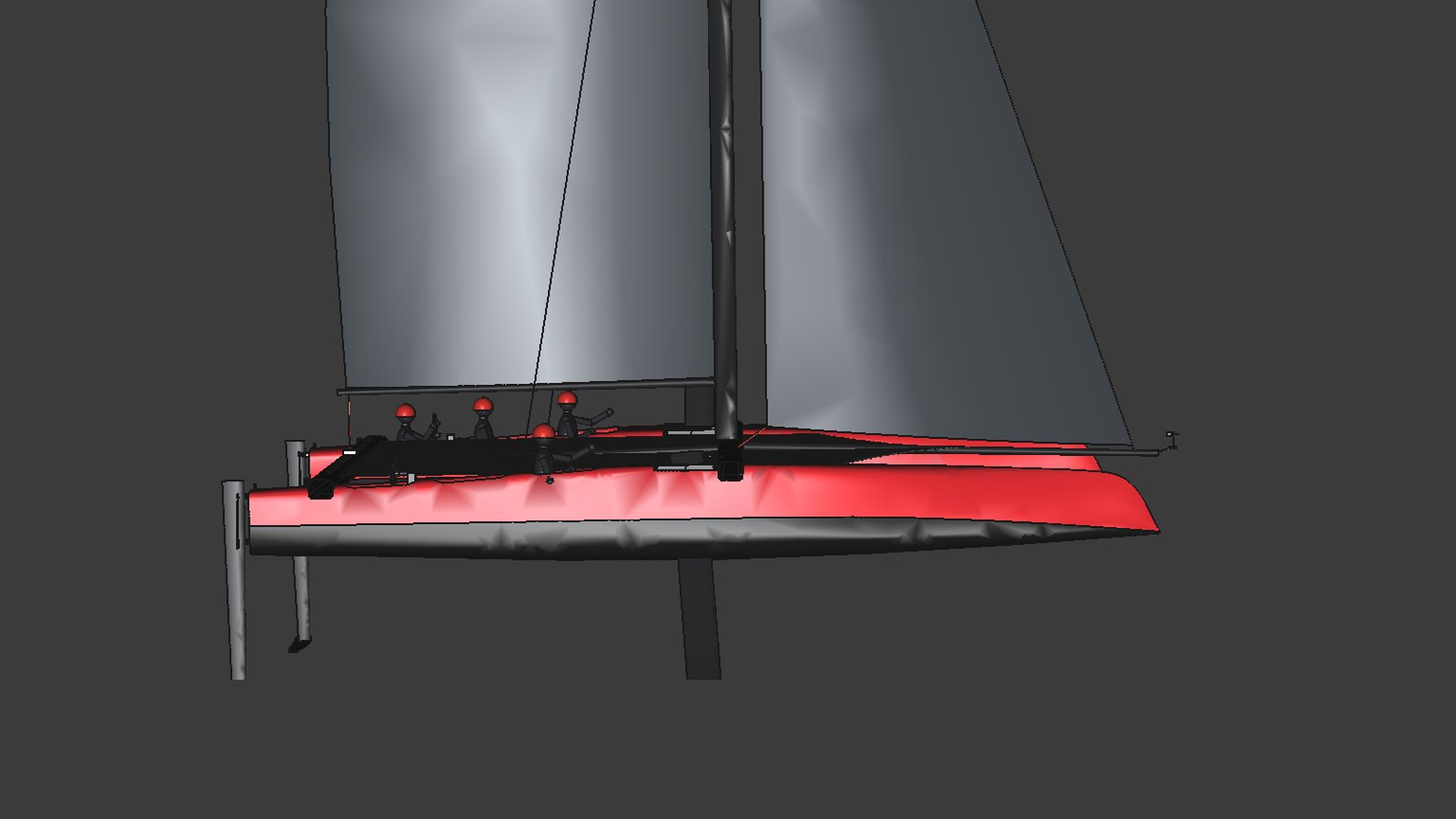
We staged the model as the boat will sail, foiling and heeled, with each camera where a photographer would stand. Those views fix the geometry; sky, water, spray and light are built on top, so every image keeps the boat’s real shape. The same model fed the stills and the site’s film. One rule, agreed with the client: these are visualisations, never presented as photographs. Anything off-design was held back, and clips with artefacts were discarded, not patched.
 3D model
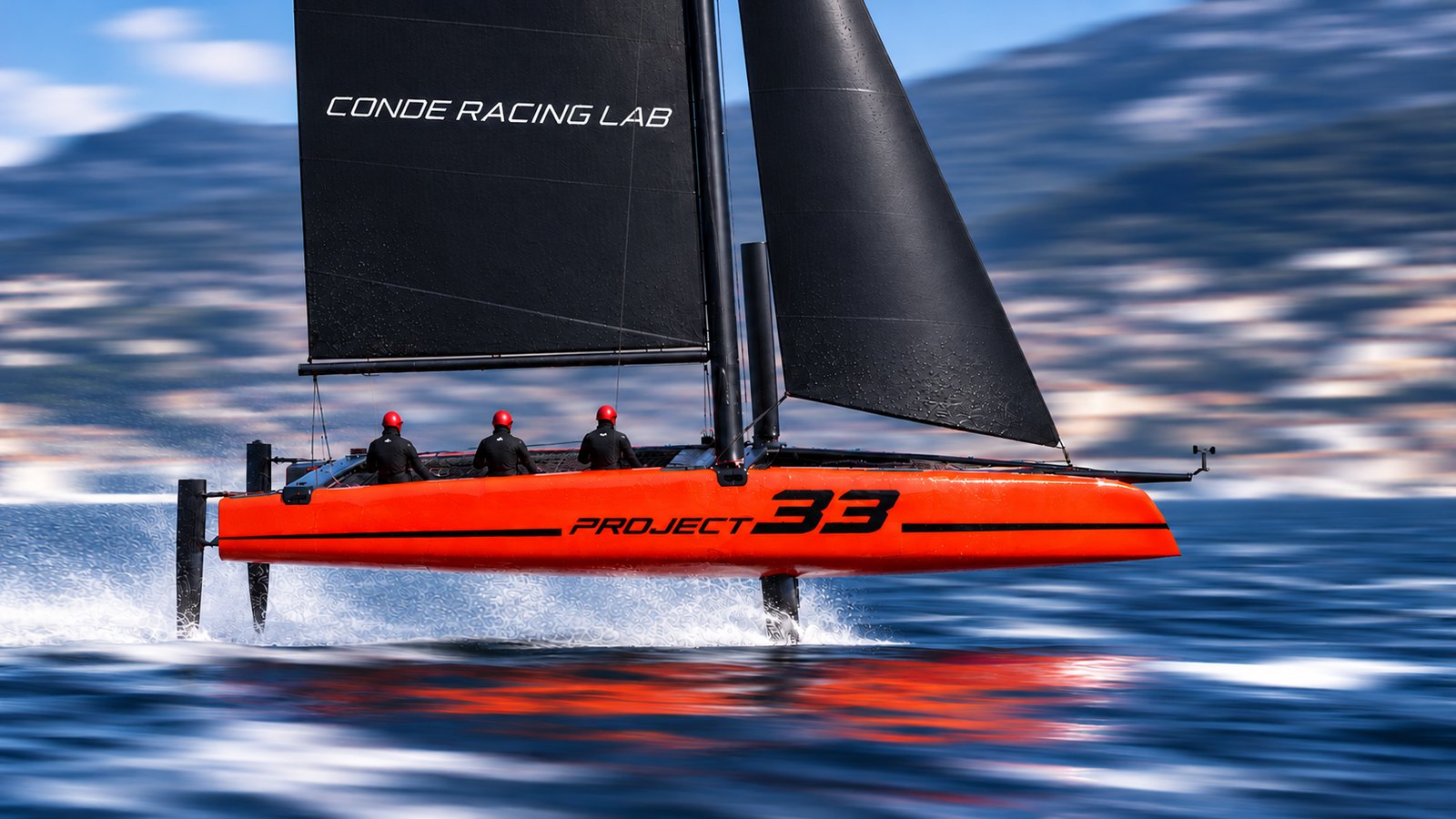 Render
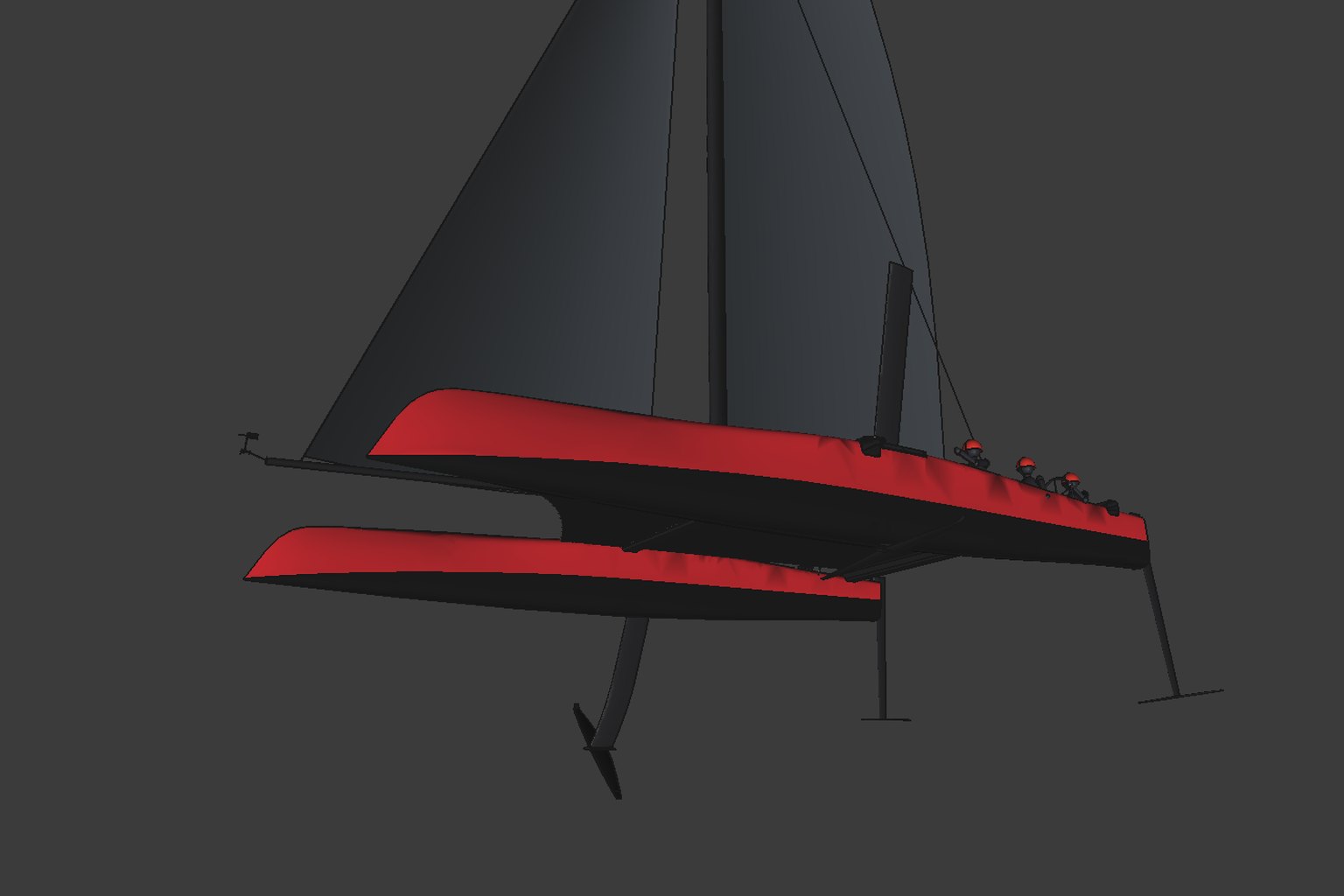 3D model
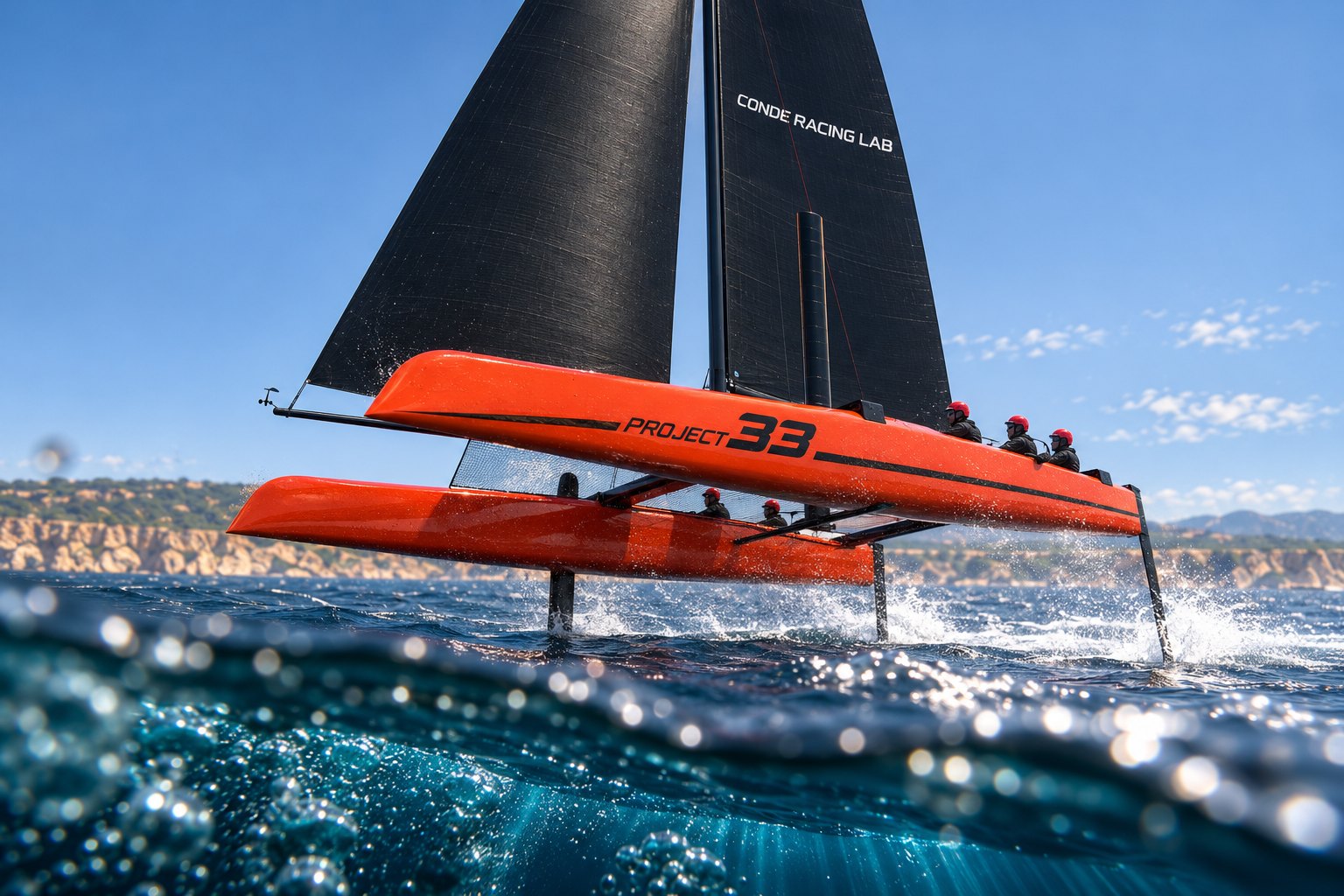 Render
Outcome
Conde Racing Lab went into the reveal with a complete launch: a brand of its own, images and film people could believe, and a site that turned attention into a list of interested sailors. Every image comes from one parametric model, so a design change travels through the code and the renders instead of being redrawn.
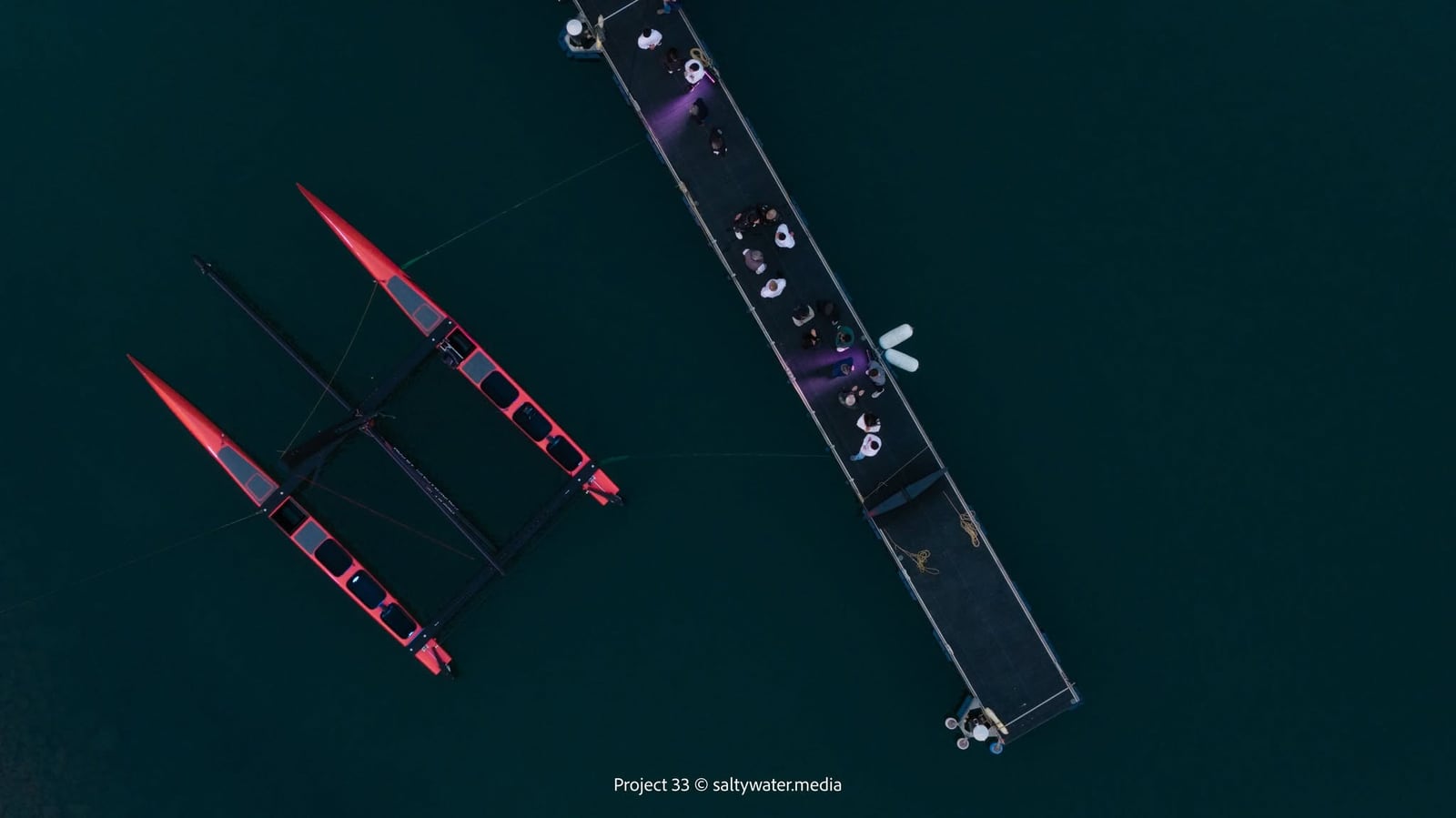
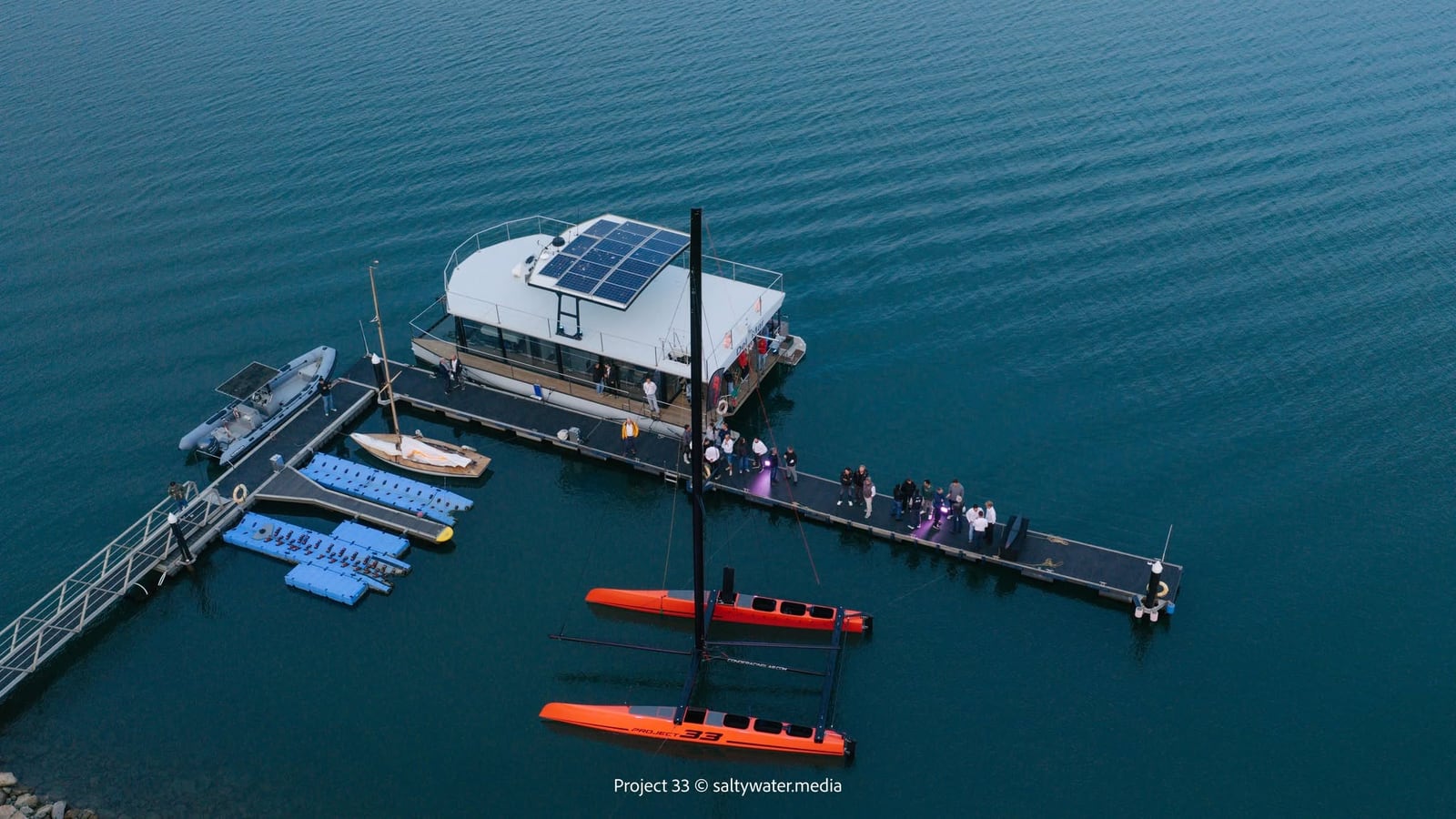
On 27 October, at Costa Nova, the real boat met the water.